

Industrial Ventilation and Duct Systems
Capturing Contaminants at the Point of Generation and Conveying Them to Downstream Air Pollution Control Equipment
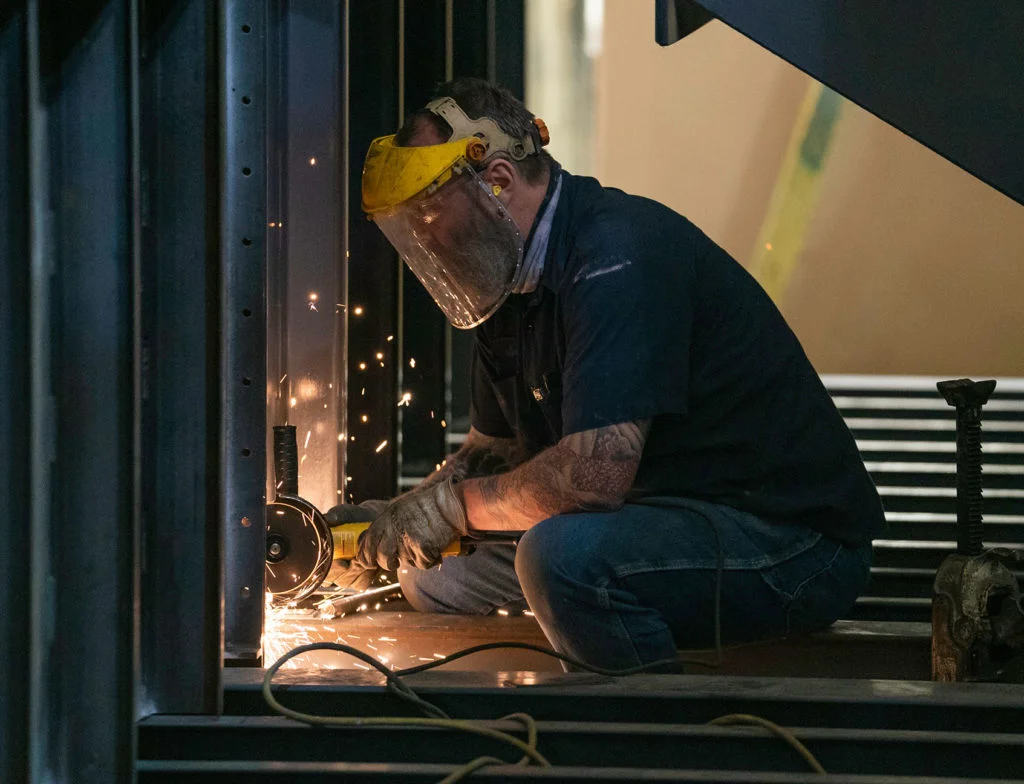
Industrial air pollution control begins before any abatement technology operates. Dust, fume, mist, smoke, vapor and gas generated at the point of industrial process activity must first be captured at or as close as possible to their source, then conveyed through an engineered duct system to the downstream collection or abatement equipment designed to treat them.
Manufacturing plants and other industrial facilities have industry-specific and application-specific requirements for process air ventilation, fume capture and exhaust, product recovery and emissions mitigation. These requirements necessitate custom-engineered solutions that meet or exceed stringent environmental standards.
A well-designed source capture and duct system determines the air volume, contaminant concentration and transport efficiency of the entire air pollution control system. Every downstream technology, from dust collectors and scrubbers to thermal oxidizers and mist eliminators, depends on effective source capture and duct design to receive the contaminant load in the condition required for treatment.

Why Industrial Facilities Must Engineer Source Capture and Duct Systems
Source capture and duct system design are not optional components of an industrial air pollution control system, they are the foundation on which every abatement technology depends.
Worker Health Protection, Fugitive Emissions Capture and Air Permit Compliance
Fume exhaust contains a significant percentage of submicron sized particulate matter. These particles can enter the lungs of workers, making effective capture and exhaust processes critical for worker health, facility compliance and the surrounding community. Without a capture device positioned at the emission point, contaminants mix with large volumes of room air, diluting to concentrations that are harder to treat and exposing workers in the surrounding area to continuous low-level contamination.
Reduced Abatement Equipment Size and Operating Cost Through Optimized Capture Volume
Regulatory requirements for worker exposure limits and ambient air quality standards drive the engineering of source capture systems. Most permissible exposure limits and air permit conditions for fugitive emissions require that contaminants be intercepted at the source where feasible. Facilities that rely on dilution ventilation alone rather than source capture typically require significantly larger air volumes, larger abatement equipment and higher energy consumption to achieve the same level of worker and environmental protection.
Efficient Delivery of Contaminants to Downstream Abatement Equipment
Duct system design directly determines whether captured contaminants arrive at the abatement equipment in the right condition. Incorrect duct velocity causes particulate dropout in the ductwork before it reaches the dust collector. Duct leakage reduces capture efficiency and allows fugitive emissions to bypass the abatement system. Poor balance between duct branches results in uneven airflow and underperformance across the system. A correctly engineered duct system is as critical to system performance as the abatement equipment it serves.

Source Capture and Duct System Technology Comparison
| Technology | Primary Function | Confirmed Capability | Installation Profile | Downstream Connection |
|---|---|---|---|---|
| Custom Ventilation and Fume Capture Systems | Custom process air ventilation, fume capture and exhaust | Turnkey design, fabrication, project management and installation | Turnkey design through full installation | Connects to dust collectors, scrubbers and oxidizers |
| Weld Smoke Collection Systems | Point-of-generation collection of welding fume | High-volume pulsing system; long-life cartridge filters | Engineered for heavy fume load production lines | Connects to filtration via duct system |
| Rolling Mill Hooding and Enclosure Systems | Capture, contain and convey rolling mill emissions | 4-Cs approach — Capture, Contain, Convey, Clean | Custom designed per application; suited to retrofits | Connects to scrubbers and thermal oxidizers |
| Modular Clamp-Together Duct Systems | Convey captured air to downstream abatement equipment | Tool-free assembly; clamp-together, Vanstone Flange and Welded Flange | Tool-free; relocatable and reconfigurable without replacement | Connects source capture to all abatement technologies |
| FM Approved and Fluoropolymer Ducting | Corrosion and fire-resistant duct conveyance | Corrosion and fire-resistant for harshest process conditions | Standard and custom fabrication for chemical installations | Connects source capture to all abatement technologies |
| Flanged Duct Systems | Heavy-gauge conveyance for abrasive high-load applications | Rugged heavy-gauge construction for high-load environments | Permanent heavy-gauge fabricated system installation | Connects source capture to all abatement technologies |
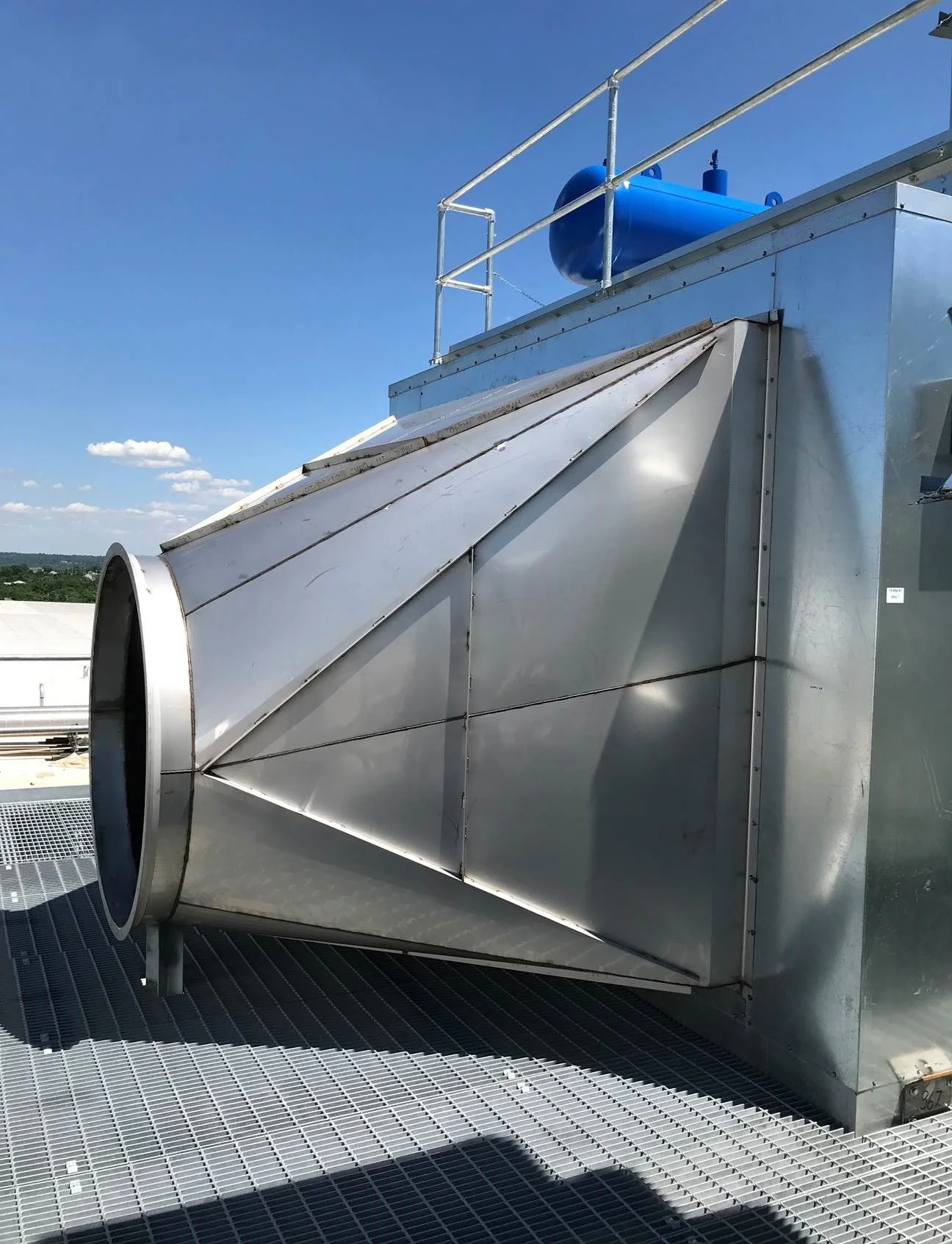
| Corrosion-Resistant Ducting and Exhaust Fans | Conveyance of corrosive airstreams in harsh environments | Corrosion-resistant fabrication for corrosive gases and vapors | Custom designed for harsh chemical and process environments | Connects to scrubbers, fans and abatement systems |
Technologies for Source Capture, Industrial Ventilation and Duct Systems

Modular Clamp-Together Duct Systems
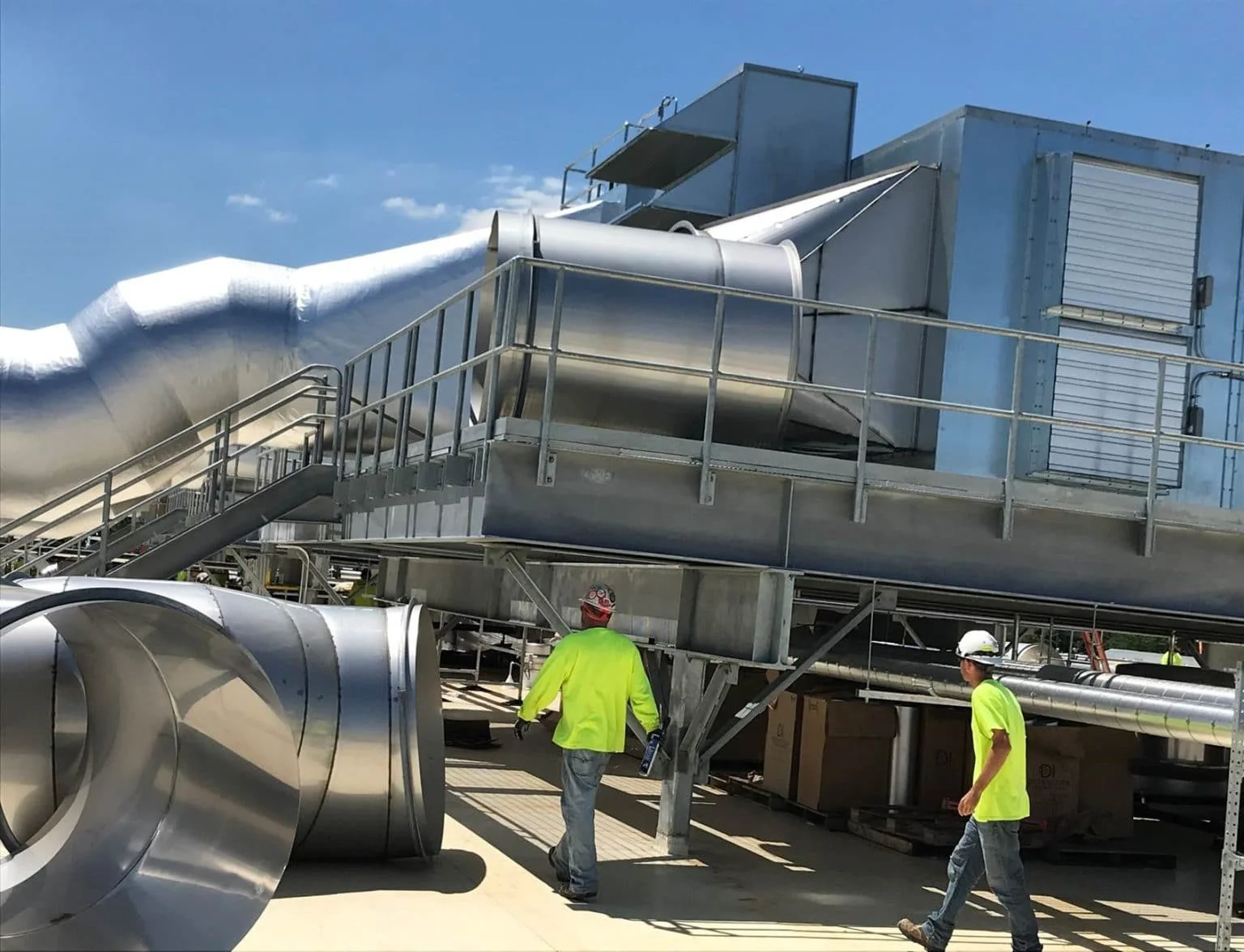
Modular clamp-together duct systems are fast-install, tool-free assemblies designed for flexible layouts and quick reconfiguration throughout the production facility. Clamp-together, Vanstone Flange and Welded Flange ducting systems are suited to virtually every dust collection system, from wood to paper to chemical, as well as fume, oil mist collection and abrasive applications. Modular duct systems connect source capture devices at the emission point to downstream dust collectors, scrubbers, thermal oxidizers and mist eliminators through a balanced, engineered conveyance system.

FM Approved and Fluoropolymer Ducting
FM Approved and Fluoropolymer ducting provides corrosion and fire-resistant duct conveyance for the harshest process environments, chemical manufacturing, acid gas handling, semiconductor fabrication and other applications where standard galvanized steel ductwork would be subject to rapid corrosion or fire exposure. FM Approved construction meets Factory Mutual certification requirements for fire resistance, and fluoropolymer construction provides chemical resistance for applications involving aggressive acid and solvent vapors.
Flanged Duct Systems
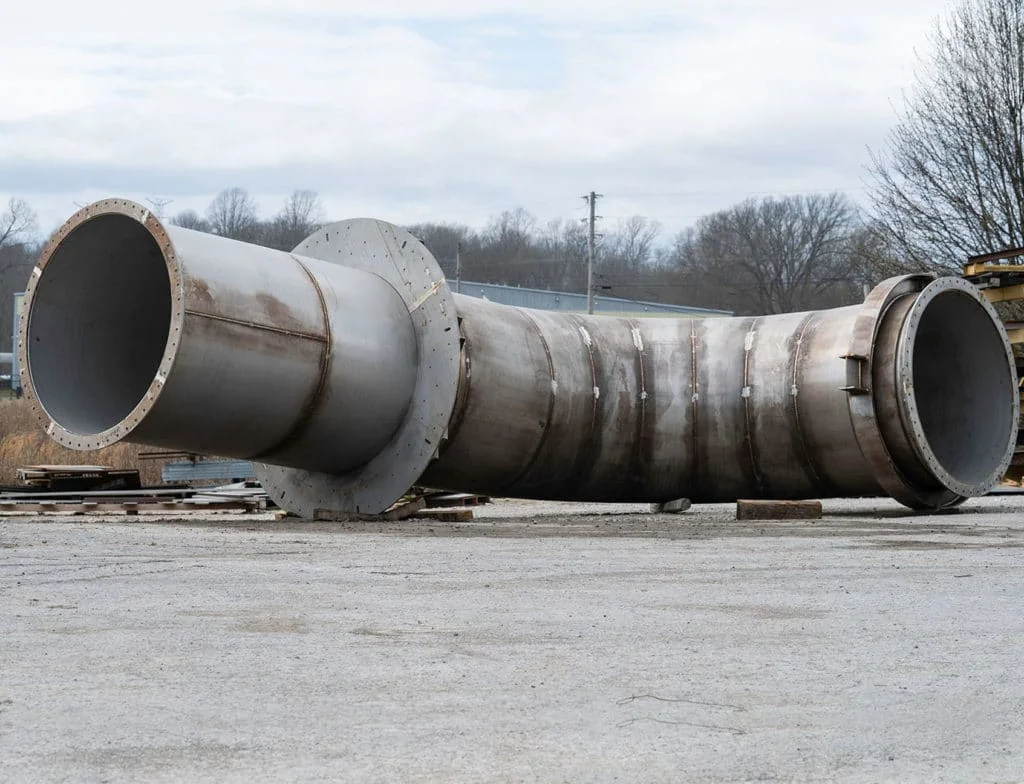
Flanged duct systems are rugged, heavy-gauge systems designed for abrasive or high-load environments requiring durable air-handling infrastructure. They are engineered for applications where the transported material, abrasive dust, heavy particulate, high-temperature exhaust or high-velocity airstream places mechanical demands on the duct system that modular clamp-together construction cannot accommodate. Flanged systems are fabricated for permanent installation in demanding industrial environments including mining, building materials processing and primary metals operations.

CECO Environmental’s source capture, industrial ventilation and duct system solutions are used across a broad range of industries including primary metals, automotive manufacturing, chemical processing, semiconductor fabrication, food and beverage processing, wood products, printing and converting and municipal wastewater treatment. CECO provides complete source capture and conveyance solutions from initial engineering design and custom fabrication through project management, delivery and installation. Every source capture and duct system is engineered in coordination with downstream abatement equipment to ensure the complete air pollution control system performs as a single integrated solution.


More Than Equipment. Engineered for Industrial Air Excellence.
As the world’s most complete end-to-end industrial air quality platform, CECO Environmental spans every stage of the industrial air treatment process, from the point of generation through final compliance. We listen and solve, innovate and support, across every major global market, so nothing stands in the way of your operations.
