

Particulate Matter Control
How Industrial Facilities Manage Dust Emissions and Product Recovery
Particulate matter (PM) control is a fundamental requirement for industrial facilities across cement, steel, chemical processing, food production, woodworking, mining, pharmaceuticals and metalworking. Airborne dust poses three distinct and simultaneous risks: it threatens worker health through respiratory exposure, creates combustion and explosion hazards when fine particles accumulate in confined spaces and generates regulatory liability when emissions exceed permit thresholds.
The core challenge across all of these areas has remained the same: protect people, equipment and the environment from the effects of uncontrolled airborne particulate.
Selecting the right particulate control technology requires understanding how each system works, what dust characteristics each handles best and how each performs against the specific regulatory and operational demands of the application.

WHY PARTICULATE MATTER CONTROL MATTERS
Health, Safety and Compliance Drivers for Industrial Dust Collection
Worker health
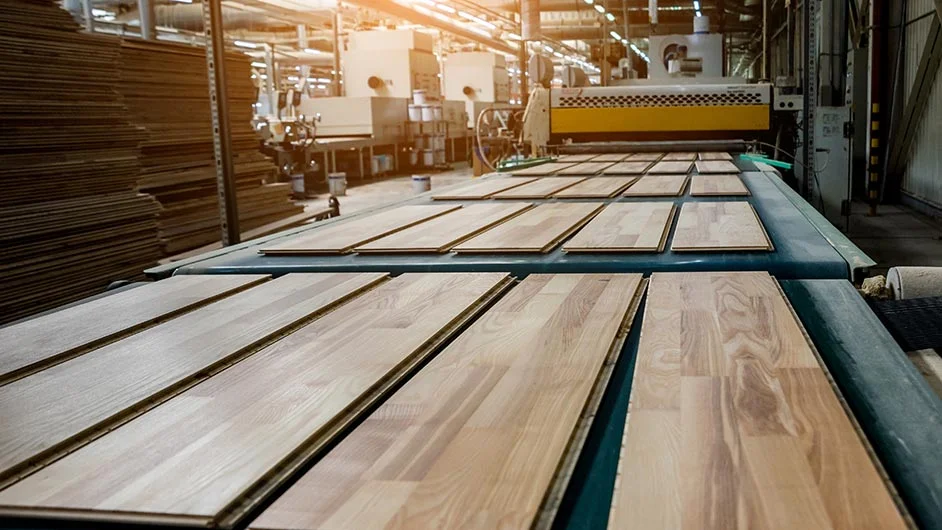
Dust particles smaller than 10 microns can be inhaled into the lungs, increasing the risk of chronic conditions including pneumoconiosis and other serious respiratory illnesses. Exposure to fine wood dust, especially particles smaller than 10µm, is linked to asthma and nasal cancer. Industries including metalworking, food processing and pharmaceuticals are particularly vulnerable to these hazards and must maintain verifiable airborne particulate control to protect workers.
Combustible dust hazards
Dust from materials including wood, flour, grain, metal shavings and chemical powders is classified as combustible dust. If not properly managed these particulates can become an ignition source leading to fires or explosions in confined environments.
Regulatory compliance
Tougher air quality standards from OSHA and the EPA mean outdated or underperforming dust collection systems may no longer meet compliance thresholds. Facilities must demonstrate consistent filtration performance that aligns with evolving regulations or face fines, halted production and reputational damage.
Equipment and Production Continuity
Dust accumulation in machinery causes filter clogging, shortens component life and leads to unplanned shutdowns. Recurring repairs to fans, motors or valves signal a system approaching end of life. Aging systems, particularly those 10 to 20+ years old, tend to consume more energy, require more frequent maintenance and offer less control over emissions than modern alternatives.

Choosing the Right Particulate Control Technology
The selection of the appropriate technology depends on dust characteristics, process conditions, required collection efficiency and facility constraints. The following factors drive the decision:
| Technology | Dust Profile | Collection Efficiency | Key Advantage |
|---|---|---|---|
| Industrial Cyclone | Coarse, high-volume, high-temperature | Moderate (pre-separation) | No filters or moving parts; product recovery |
| Pulse Jet Baghouse | Coarse to medium, high continuous load | Up to 99.999% | High volume handling; abrasion-resistant designs |
| Cartridge Collector | Fine to submicron, moderate loads | Up to 99.999% | Compact; easy maintenance; nano-fiber media |
| Wet Electrostatic Precipitator | Submicron fine particulate and aerosol downstream of wet scrubber | High-efficiency submicron aerosol removal, BACT recognized | Patented electrode design; continuous water flush; smaller sizing when paired with upstream MicroMist Scrubber |
Primary Technologies for Industrial Dust and Particulate Control
Pulse Jet and Baghouse Dust Collectors
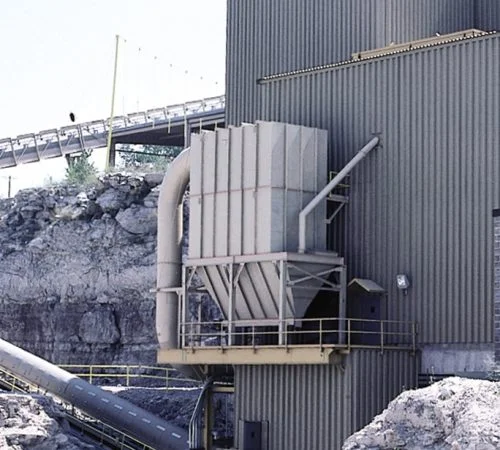
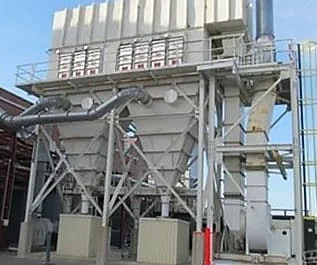
Baghouse dust collectors, including pulse jet designs, use fabric filter media to capture and contain airborne dust from industrial process exhaust. They became the dominant large-scale particulate control technology in the 1950s and remain the standard choice for high-dust-load applications and large-volume continuous operations. Pulse jet systems introduced automated filter cleaning using compressed air pulses allowing for continuous operation without manual filter removal.
How Baghouse Dust Collectors Work:
Process exhaust containing airborne dust enters the baghouse housing and passes through fabric filter bags or cartridges. Dust is captured on the filter surface while cleaned air passes through the media and exits through the clean air plenum to the exhaust stack. As dust accumulates on the filter surface the differential pressure across the system increases. A pulse jet cleaning system periodically fires short bursts of compressed air through the filter bags in reverse direction, dislodging the accumulated dust cake which falls into a collection hopper below for disposal or recovery.
Pulse jet systems can be customized for hazardous service and sanitary applications and are configured for optimal performance in product recovery systems, large bin venting applications and general nuisance dust collection. Each system is custom designed to fit specific application requirements including height limitations and size restrictions.


Cartridge Dust Collectors
Cartridge dust collectors use pleated filter cartridges, rather than fabric bags, as the filter media. The pleated design significantly increases filter surface area within a compact housing, allowing cartridge systems to handle equivalent airflows in a smaller footprint than baghouse designs. Cartridge collectors are particularly well-suited for fine particulate applications where high collection efficiency and easy filter maintenance are priorities.
Industrial Cyclones
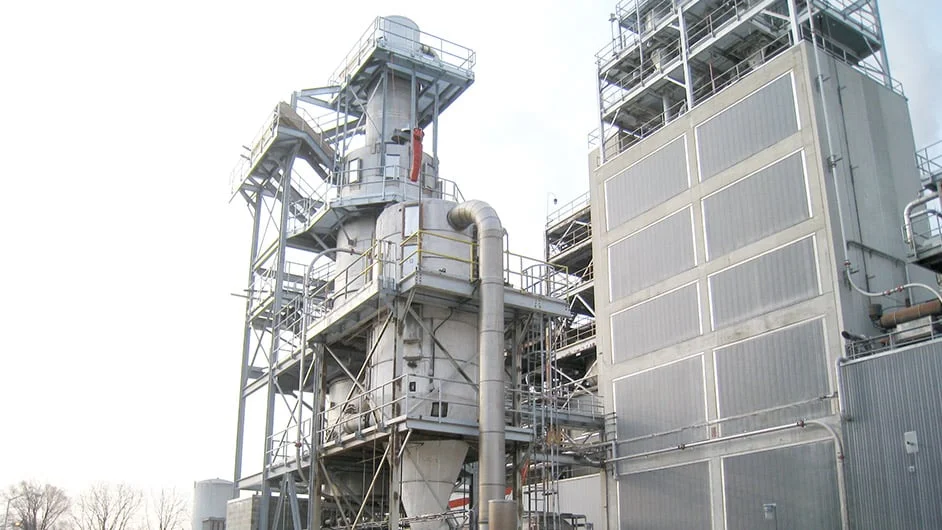
An industrial cyclone is a mechanical separator that uses centrifugal force to remove particulate from gas streams without the use of filters or moving parts. Cyclones are primarily used for particulate removal and product recovery in high-volume, high-temperature and erosive applications where filter-based systems would be impractical or where the recovered material has economic value.
How Industrial Cyclones Work:
Particulate-laden gas enters the cyclone tangentially creating a spinning vortex inside the cylindrical body. Centrifugal force pushes the particles outward toward the walls of the cyclone where they spiral downward to the bottom of the cone and are discharged through a collection hopper. The cleaned gas reverses direction inside the cyclone and exits upward through the outlet pipe, also called the vortex finder, as clean air. The entire process occurs without filters or moving parts providing simple operation and maintenance.

Cyclones Paired with Scrubbers
In many applications both a cyclone and a scrubber are used together to maximize product recovery while meeting strict emissions standards. The cyclone handles the bulk coarse particulate load and the scrubber manages residual fine particulate and gaseous contaminants in the downstream exhaust. This combination is common in pharmaceutical, building products and petrochemical applications where both product recovery and stringent emissions compliance are required simultaneously.
Wet Electrostatic Precipitators (WESP)
A Wet Electrostatic Precipitator is a compact, high-velocity system engineered for superior fine particulate and aerosol removal from industrial exhaust streams. The Wet ESP integrates directly into the shell of the upstream scrubber system for efficient, space-saving installation and is recognized as Best Available Control Technology (BACT) for final cleanup on wet scrubbers in jurisdictions with the most stringent particulate emission requirements.
How a WESP Works:
Flue gas from the upstream scrubber enters the Wet ESP module carrying residual fine particulates and aerosols suspended in the saturated gas stream. A proprietary electrode design generates a strong electrical field that imparts a charge to fine particles and aerosols as they pass through the precipitator. Charged particles migrate toward grounded collection surfaces where they are captured and removed from the gas stream. Water continuously flushes the collection surfaces, removing captured particulates and maintaining optimal collection performance without downtime. Conditioned, cleaned gas exits the Wet ESP module meeting stringent emission requirements for fine particulate and aerosol control.
Key Design Capabilities:
- Patented electrode technology delivers high-efficiency particle charging and collection for fine particulates and aerosols
- Advanced control system optimizes performance and allows real-time monitoring of precipitator operation
- Field segregation capability allows electrical fields to be segregated independently, providing operational flexibility and simplifying maintenance
- Compact module integrates directly into the upstream scrubber shell eliminating the need for separate vessel footprint


CECO Environmental designs and manufactures industrial cyclones, pulse jet baghouse dust collectors and cartridge dust collectors for facilities across a broad range of industries. Solutions are provided as both standard and custom-designed systems with materials of construction including carbon steel, stainless steel and exotic alloys tailored to specific application requirements. CECO offers turnkey project delivery including system design, engineering, fabrication, installation and ongoing maintenance and parts support.


More Than Equipment. Engineered for Industrial Air Excellence.
As the world’s most complete end-to-end industrial air quality platform, CECO Environmental spans every stage of the industrial air treatment process, from the point of generation through final compliance. We listen and solve, innovate and support, across every major global market, so nothing stands in the way of your operations.
