

Metals Industry Air Quality
How Rolling Mills Capture, Control and Comply
Iron, steel and aluminum rolling mills present a combination of air quality challenges unlike any other manufacturing environment. A single production line generates oil mist and VOC emissions from rolling coolants, acid fume from pickle line surface treatment, fugitive metallurgical fumes from secondary operations, weld smoke from fabrication and assembly lines and intense process heat from the strip as it exits the rolling stands. This occurs simultaneously, with all requiring control without interrupting production.
Regulatory Requirements
Rolling mill emissions are subject to PM 2.5 standards and opacity limits that require Best Available Control Technology.
Pickle line acid fume is a regulated HAP requiring engineered scrubbing systems. VOC emissions from rolling oil heating operations require thermal destruction or recovery systems.

The Air Quality Challenges Specific to Rolling Mill and Metals Processing Operations
Oil Mist and VOC Emissions from Rolling Operations
Rolling mills apply coolant to the strip and rolls to control temperature and friction during the rolling process. Hydraulic pressure sprays and surface boiling followed by condensation generate oil mist across a wide range of droplet sizes. The quantity and particle size of liquid mist generated are a function of coolant type, coolant flow rate, metal temperature, strip speeds and saturation dew point. Simultaneously, heat applied to oil-based coolants generates VOC emissions that must be abated to meet permit requirements. A multiplicity of coolants and rolling methods, water-based, oil-based and oil/water emulsion-based, mandate different control approaches for different mill configurations.
Acid Fume from Pickle Line Operations
Modern steel mill pickle lines use hydrochloric acid to clean the surface of the steel sheet before further processing. Acid mist and HCl fume are generated continuously during this process and must be captured at the source and neutralized before exhaust discharge. HCl is a listed hazardous air pollutant subject to MACT standards and permit compliance requires engineered scrubbing systems with high removal efficiency.
Fugitive Metallurgical Fumes from Secondary Operations
Metallurgical melting, casting and secondary processing generate fugitive particulate and fume emissions beyond the primary rolling mill exhaust. These secondary emissions require dedicated collection systems that can be custom designed to the specific space and process constraints of each facility.
Weld Smoke from Production Line Welding Operations
Welding operations in steel and aluminum processing generate concentrated fume streams from production line welding equipment. Heavy fume load applications in automotive-adjacent metals production require high-efficiency collection with reliable continuous operation and low-maintenance filter systems.
DC Drive Motor Cooling
Large DC drive motors powering rolling mill stands generate significant heat in service. Inadequate motor cooling reduces motor performance and service life. Specialized cooling systems maintain motor temperatures within design limits, extending equipment uptime and protecting capital investment.
Process Heat from Strip Cooling and Drying Operations
As hot strip exits the rolling mill it must be cooled rapidly to meet metallurgical specifications without damaging the strip surface or causing instability at production speeds. Strip flutter, lateral instability caused by uncontrolled airflow forces against the moving strip, creates production quality problems and increases scrap rates. Controlling strip cooling is both a production and an air handling engineering challenge requiring patented aerodynamic solutions.
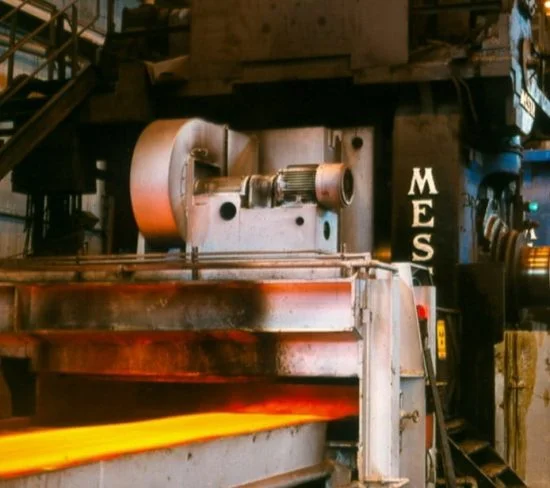
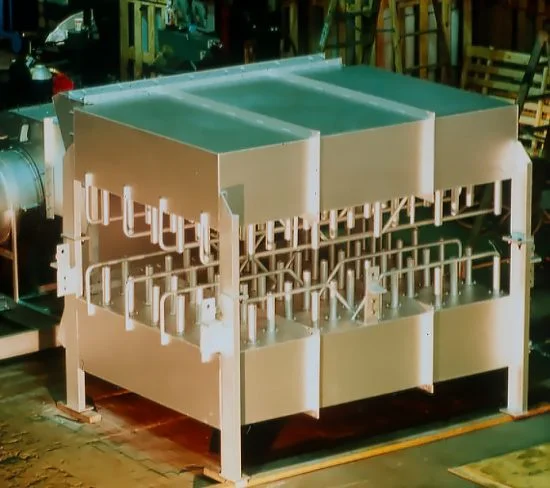
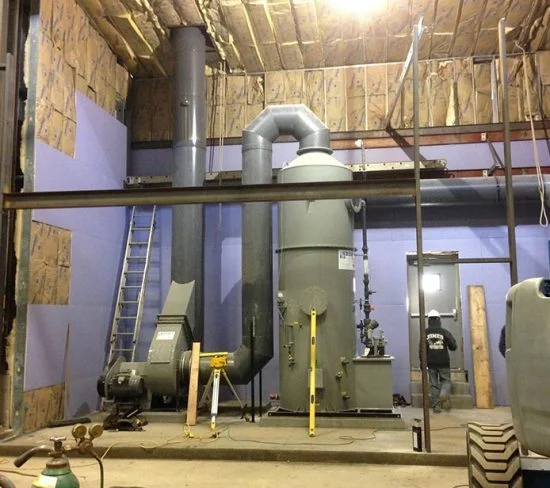
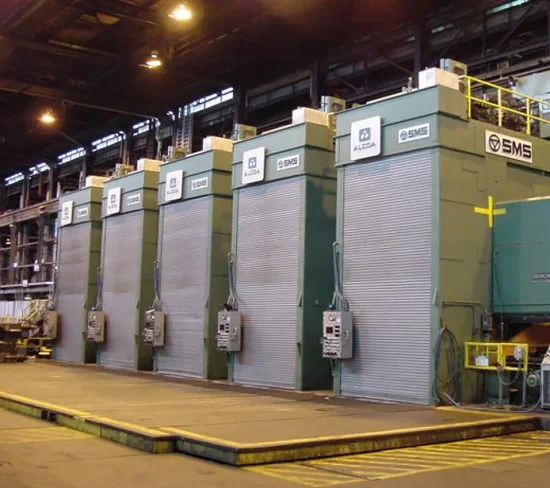
Rolling Mill and Metals Processing Production Stage and Relevant Technologies
The challenge is not simply choosing an air pollution control technology. It is engineering a system where every component, fume capture hood, mist eliminator, scrubber, strip cooler, VOC abatement system and motor cooling unit is designed around the specific process conditions of the mill.
| Production Stage | Emission Challenge | Technology Applied |
|---|---|---|
| Rolling mill stands | Oil mist, VOC, PM from coolant application | Fume Shield capture hoods, PPS/DBF mist eliminator, heavy oil scrubber |
| Sendzimir cold rolling | Submicron oil mist, PM 2.5, opacity | PPS/DBF multi-stage mist eliminator |
| Pickle line | HCl acid fume, mist | Packed bed acid scrubber with FRP ductwork and Stack Skimmer |
| Strip exit from rolling stands | Process heat, strip flutter | Jet*Star Strip Cooling System |
| Strip after cooling or surface treatment | Residual moisture, airborne mist | Jet*Star Strip Drying System |
| Production line welding | Weld fume, metallic particulate | Weld Smoke Collection Systems |
| Metallurgical melting operations | Fugitive metallurgical fume | Fugitive Emissions Filtration units |
| DC drive motors | Motor heat, reduced equipment life | DC Drive Motor Cooling Systems |
Technologies for Metals Industry Fume Capture, Mist Elimination and Process Air Control
Rolling Mill Fume Exhaust and Fume Shield Capture Systems
The foundation of any rolling mill emission control system is the capture hood. The most efficient pollution control equipment downstream cannot compensate for a poorly designed capture system that allows fume to escape the mill enclosure before it reaches the exhaust ductwork. Computer model-based selection of optimum exhaust volumes and hood geometry provides the best possible capture efficiency while minimizing total exhaust volume and reducing the size and cost of every downstream component.
Efficient hood designs reduce exhaust volume, which directly decreases the size and cost of the fume system and the operating cost of the induced draft fan throughout the system’s service life. This approach is recognized as Best Available Control Technology for capture, conveyance and collection of emissions from steel and aluminum rolling mills.
Rolling Mill Mist Elimination – PPS/DBF Systems
For Sendzimir-type and cold rolling mill applications where the size and character of liquid mist vary across a wide range due to multiple mist generation mechanisms, multi-stage mist elimination systems developed specifically to meet PM 2.5 environmental regulations and opacity control requirements address what single-stage systems cannot.
Rolling mill mist generation involves hydraulic pressure sprays and surface boiling followed by condensation producing droplets that span from large visible mist to submicron aerosol. A multiplicity of coolants and rolling methods mandate multiple collection stages to achieve the lowest maintenance burden and highest possible collection efficiency across this full particle size range.
How PPS/DBF Systems Work:
The PPS/DBF mist eliminator mechanically removes and drains liquid particulate using multiple collection mechanisms in staged sequence. Mists are removed by inertial impaction for larger droplets, direct interception for medium droplets and Brownian capture for fine submicron droplets, each mechanism addressing a specific portion of the droplet size distribution. The system employs cleanable media, disposable media or a combination of both depending on the specific mill application and maintenance requirements.

Heavy Oil Scrubbing Systems for VOC Abatement and Product Recovery
Rolling mills operating with heavy oil-based coolants generate VOC emissions from the oil heated during rolling operations. Heavy oil scrubbing systems address both the emission control requirement and the product recovery opportunity, capturing rolling oil from the exhaust stream and returning it to the process, reducing raw material cost while meeting VOC permit requirements.
The combination of VOC abatement and product recovery in a single system reduces the total operating cost of the rolling mill emission control installation. Recovered rolling oil returned to the mill process offsets coolant purchasing costs while the system simultaneously achieves regulatory compliance.
Pickle Line Fume Exhaust and Acid Scrubbing Systems
Modern steel mill pickle lines use hydrochloric acid to clean the steel sheet surface. Acid mist and HCl fume generated during this process require capture at the tank covers and neutralization before exhaust discharge. The scrubbing system begins at flanged connections to the pickle line tank covers containing the emission at the point of generation before it can migrate into the facility.
A fiberglass duct connects the tank covers to the scrubber and fan system for exhaust to the outdoors. The pickle line scrubber is a countercurrent packed bed scrubber providing excellent mass transfer for high-efficiency HCl fume capture at minimum pressure drop. The scrubber housing incorporates vertical or horizontal outlet flange configurations to accommodate installation in limited space conditions common in retrofit pickle line applications.
Weld Smoke Collection Systems
Welding operations in steel and aluminum processing facilities, including production line welding, fabrication and assembly, generate concentrated fume streams that require high-efficiency collection to protect worker health and meet ambient air quality standards. Weld smoke collection systems are engineered for maximum performance, reliability and efficiency on heavy fume load production line applications with decades of proven performance in automotive-adjacent metals production environments.
Jet*Star Strip Cooling and Drying Systems
The Jet*Star Strip Cooling System is the most efficient method to air cool a moving strip in the metals industry. Patented technology combining aerodynamic and thermodynamic principles enables cooling of heavier gauge strip at higher strip speeds while requiring less energy and space than alternative methods. This directly supports mill productivity, as faster cooling at higher strip speeds means higher throughput without additional cooling line length.
A critical secondary benefit is the reduction of strip instability. By controlling lateral aerodynamic forces against the moving strip through aerodynamic balancing, strip flutter is eliminated or substantially reduced, improving strip quality and reducing scrap from surface defects caused by strip movement during cooling.
Fugitive Emissions Filtration
Secondary emissions from metallurgical melting processes generate fugitive particulate and fume that require collection beyond the primary rolling mill exhaust system. Fugitive emissions filtration units provide secondary emissions control of metallurgical fumes and are custom designed to fit specified space dimensions, wiring and connection requirements and material of construction requirements of each facility.
DC Drive Motor Cooling Systems
Large DC drive motors powering rolling mill stands generate heat in service that must be managed to maintain motor performance and protect motor life. Specialized cooling systems for DC drive motors maintain motor temperatures within design limits, extending equipment service life and protecting the capital investment in primary rolling mill drive equipment.

CECO Environmental designs and manufactures air-handling equipment and systems for filtering, cooling, heating and capture of emissions from metals industry applications. Solutions are provided as both standard and custom-engineered systems developed by an engineering staff experienced across aerodynamic, thermodynamic, mechanical, civil and electrical disciplines. CECO offers turnkey project delivery including conceptual studies, application engineering, fabrication, field services and system startup.

More Than Equipment. Engineered for Industrial Air Excellence.
As the world’s most complete end-to-end industrial air quality platform, CECO Environmental spans every stage of the industrial air treatment process, from the point of generation through final compliance. We listen and solve, innovate and support, across every major global market, so nothing stands in the way of your operations.
