

VOC and HAP Control
How Industrial Facilities Destroy Harmful Emissions with Thermal Abatement
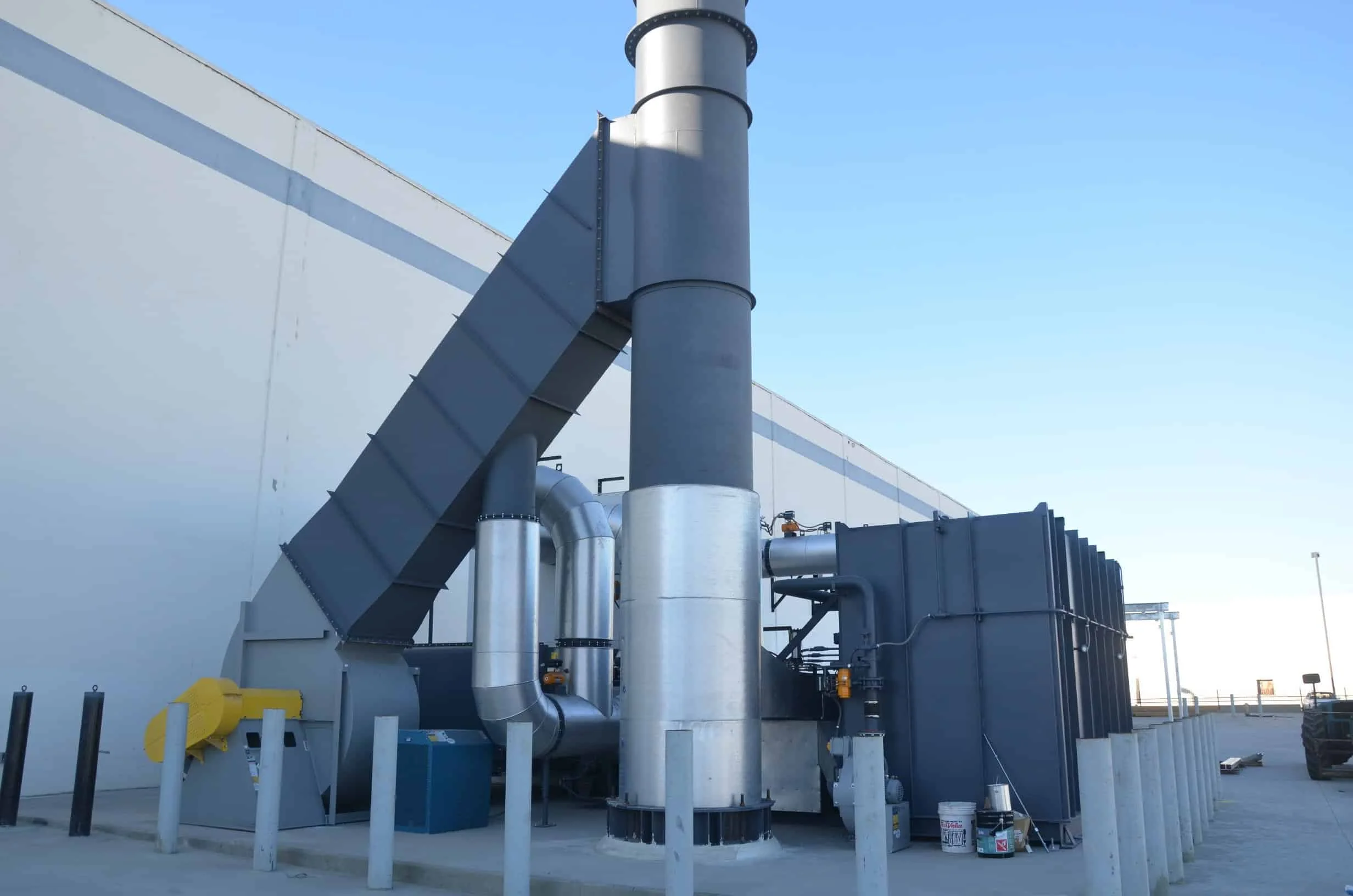
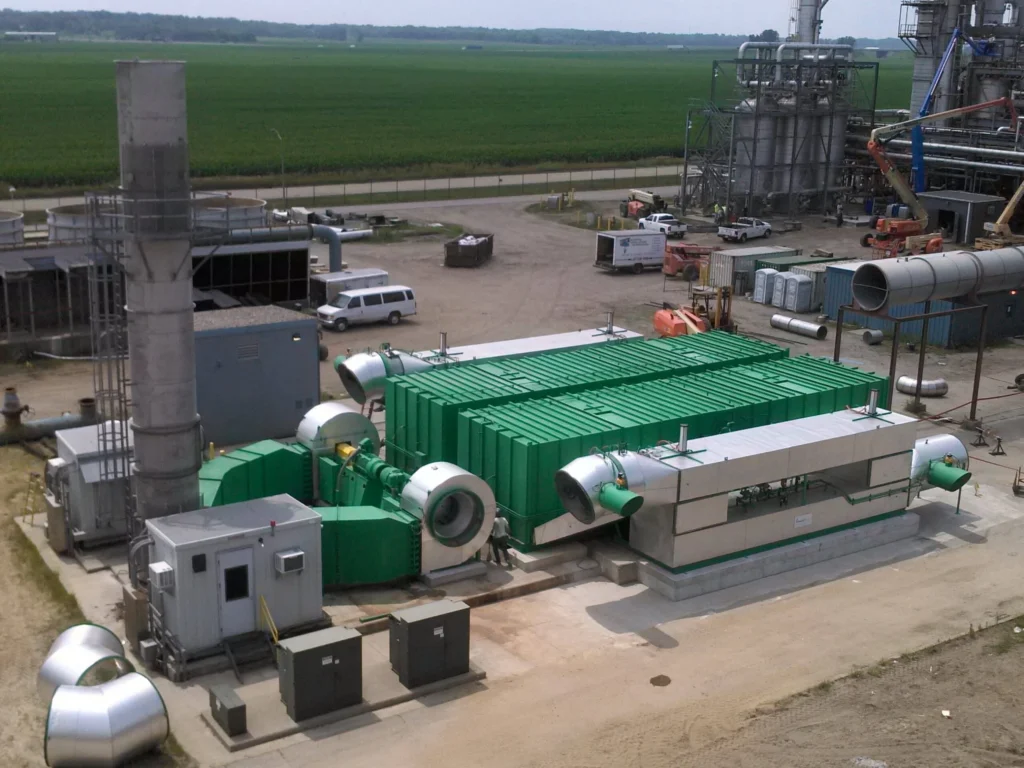
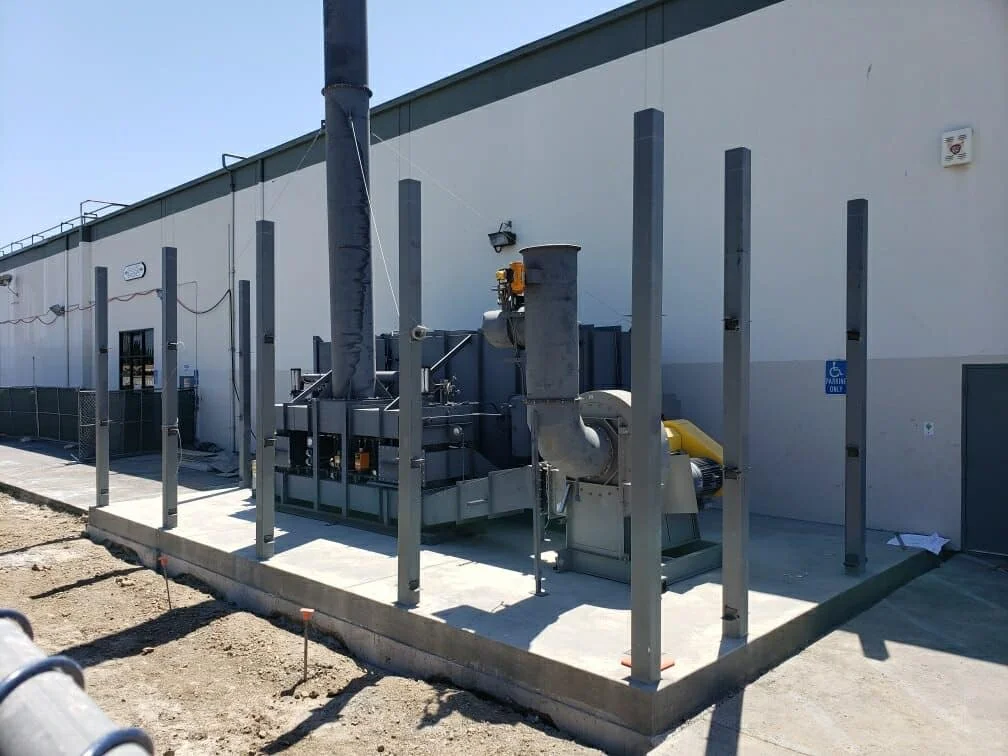
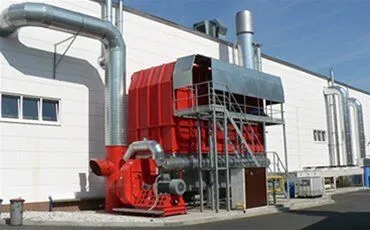
Thermal oxidizers are air pollution control systems engineered to neutralize harmful pollutants emitted during industrial processes. They operate on the principle of combustion, using elevated temperatures to oxidize and eliminate volatile organic compounds (VOCs), hazardous air pollutants (HAPs) and other contaminants present in industrial exhaust gases. The combustion process converts these pollutants into carbon dioxide and water vapor, two substances significantly less harmful to the environment, before they are released into the atmosphere.
Industrial VOC emissions contribute to ground-level ozone formation and are regulated under EPA MACT and EU BREF standards.
Regenerative Thermal Oxidizer (RTO) technology is the recognized “best available technology” for VOC destruction across most industrial sectors.

The Fundamentals of Thermal Oxidation
Thermal oxidizers work by heating polluted air streams to a temperature where chemical bonds of the pollutants break down. This combustion process converts VOCs and HAPs into carbon dioxide and water vapor. Thermal oxidizers operate by heating exhaust gases to high temperatures, typically between 1,400°F and 1,800°F. At these temperatures, hydrocarbon-based pollutants undergo oxidation.
Three variables govern the effectiveness of any thermal oxidation process:
Temperature — Temperatures above 1,500°F are recommended for thermal oxidation without an auxiliary VOC catalyst. VOCs spend 0.5 seconds to up to 2.0 seconds at high-temperature retention time to ensure complete oxidation of longer-chain hydrocarbons, ketones and aldehyde compounds.
Time — Sufficient residence time inside the combustion chamber ensures VOC molecules are fully exposed to oxidation conditions. Adequate residence time is a primary design parameter in any thermal abatement system.
Turbulence — Adequate mixing of oxygen with VOCs is required inside the oxidizer. Each VOC molecule needs an equal proportion of O₂ for the oxidation reaction to occur. A minimum of approximately 16 mole percent oxygen in the process is typically required for proper combustion.
Depending on the design, thermal oxidizers may also recover heat to improve energy efficiency. The type of heat recovery system, or absence of, is what differentiates the five primary categories of thermal oxidation technology.

Selecting the Right Thermal Abatement Technology
The selection of the appropriate technology depends on the combination of exhaust flow volume, VOC concentration, compound profile, required destruction efficiency and annual operating hours. No single technology is universally optimal.
|
Technology |
Heat Recovery |
Typical DRE |
Application Profile |
|---|---|---|---|
|
Regenerative Thermal Oxidizer (RTO) |
Up to 97–98% |
99%+ |
High-volume, continuous, low-to-moderate concentration |
|
Recuperative Thermal Oxidizer |
50–75% |
99%+ |
Moderate volume, variable or fouling streams |
|
Direct Fired Thermal Oxidizer (DFTO) |
None |
99%+ |
High-concentration, batch or intermittent processes |
|
Catalytic Oxidizer |
Moderate (with recuperative option) |
95–99%+ |
Catalyst-compatible lower-concentration streams |
|
VOC Concentrator + Oxidizer |
System-level reduction |
99%+ |
High-volume, dilute-concentration streams |
Types of Thermal Oxidizers: How Each Technology Works
Autothermal Operation
For facilities with sufficient VOC concentrations in their exhaust streams, RTOs are engineered to achieve autothermal flameless operation, a condition in which the RTO sustains the oxidation process with zero natural gas input, delivering:
- Elimination of natural gas consumption during steady-state operation
- Significant reduction in operating costs over the life of the system
- Lower carbon footprint by removing combustion-related emissions from the oxidation process itself
- Retrofit capability for autothermal operation is available as an upgrade to existing RTO installations, allowing facilities to maximize the efficiency of their current equipment without full system replacement
Regenerative Thermal Oxidizer (RTO)
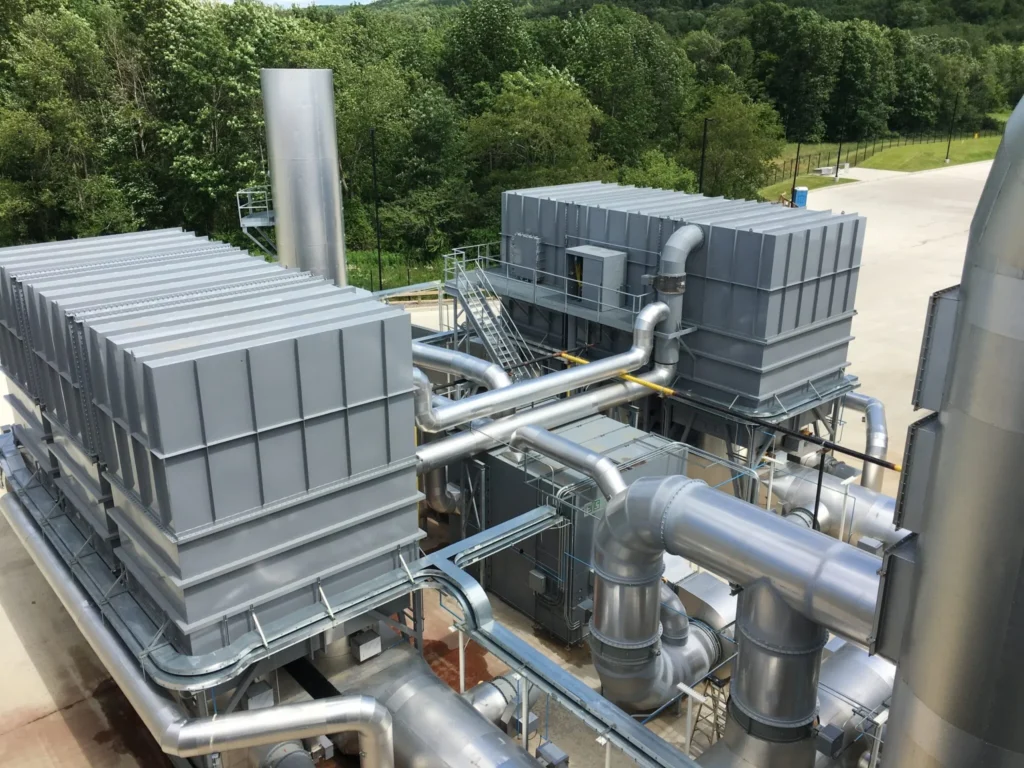
A Regenerative Thermal Oxidizer is designed to purify industrial exhaust streams by employing extreme heat to convert pollutants into harmless water vapor and carbon dioxide. RTOs are known for their high energy efficiency and are commonly used in industries where large volumes of low-concentration VOCs are produced.
How an RTO Works:
VOC-laden air is directed by a flow control valve to flow through ceramic media beds into the combustion chamber where the VOCs are purified. These RTO ceramic media beds are designed to provide up to 97% primary heat recovery and produce high rates of heat transfer. This results in the air being preheated very close to the required oxidation temperature of 1,500°F to 1,700°F by the time it reaches the combustion chamber, requiring minimal auxiliary fuel input.
The clean air then exits the combustion chamber through outlet beds that have been previously cooled. As the air passes through these beds, it is cooled by the same heat transfer process. After passing through the outlet beds, the air exits the RTO system at a temperature only slightly higher than the inlet temperature.
After several minutes the first set of inlet beds becomes depleted of heat while the second set of outlet beds becomes preheated with the heat liberated from the combustion process. At this point the flow of air through the beds is switched, the previous inlet beds act as outlet beds and the former outlet beds act as the purge bed. The purged bed becomes the inlet bed. In this way each bed periodically extracts heat from the clean gas stream exiting the combustion chamber then releases this heat into the polluted gas entering the combustion chamber. This method is thermal regeneration. A dedicated purge bed is utilized with tower RTOs to assure 100% capture of the VOCs and treatment on the inlet bed side.
Recuperative Thermal Oxidizer

A Recuperative Thermal Oxidizer uses a metallic heat exchanger, typically a shell-and-tube or plate-type exchanger, to recover heat from the exhaust gases and transfer it to the incoming air stream. While recuperative systems also focus on energy recovery, they typically achieve lower heat recovery efficiency compared to regenerative systems, recovering around 50–75% of the heat. However, they are often easier to integrate into processes where direct heat exchange is more straightforward.
How a Recuperative Thermal Oxidizer Works:
VOC-laden process air enters the heat exchanger, where it is preheated using thermal energy recovered from the treated outlet stream. The preheated air then enters the combustion chamber, where the burner raises it to oxidation temperature, typically 1,200°F to 1,800°F, for the required residence time. The pollutants are converted to carbon dioxide and water within the reactor chamber. The hot, clean air then passes again through the heat exchanger where the energy released by the reaction preheats the next incoming air stream. Upon exiting the heat exchanger, the clean air routes through the exhaust stack.
Because the heat exchanger operates continuously in a single direction rather than alternating between beds, recuperative oxidizers produce a clean, continuous exhaust stream with no valve-switching events.
Direct Fired Thermal Oxidizer (DFTO)
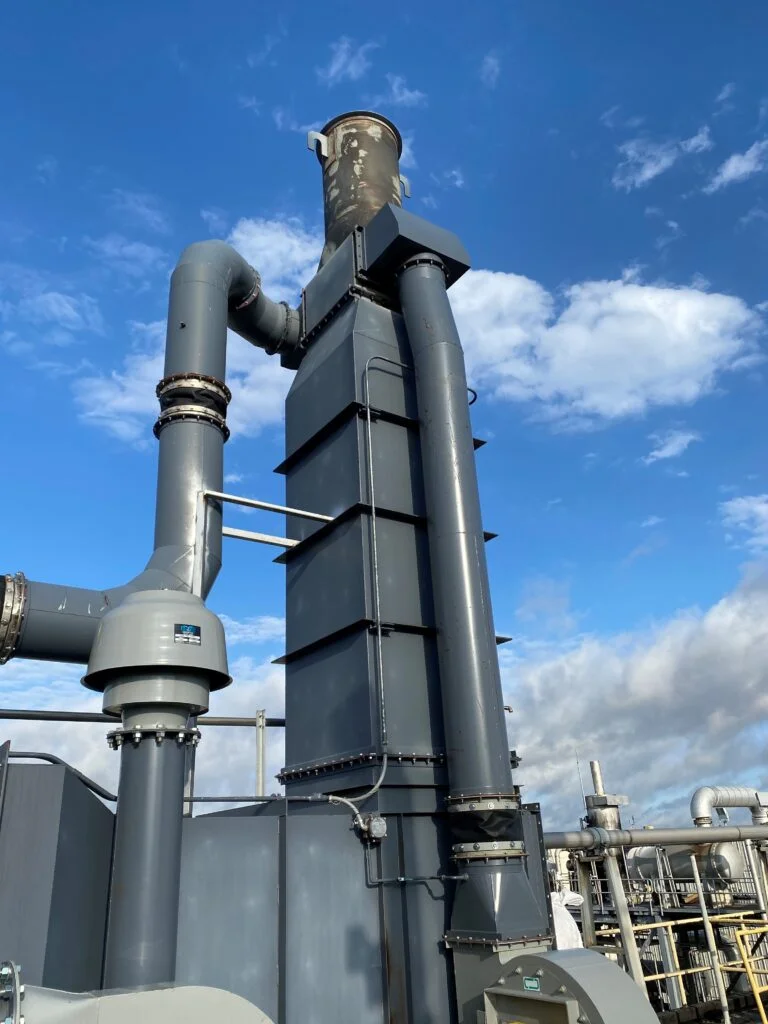
A Direct Fired Thermal Oxidizer is the most straightforward thermal oxidizer design. Unlike regenerative or recuperative thermal oxidizers, DFTOs do not incorporate a heat recovery system. The process relies entirely on direct combustion to achieve the required temperature for oxidizing hazardous pollutants. This absence of a heat recovery system makes DFTOs less mechanically complex and easier to maintain.
How a DFTO Works:
Process exhaust is introduced directly into a high-temperature combustion chamber through or near the burner. The burner maintains the air temperature at the oxidation setpoint, typically 1,400°F to 1,600°F. Residence time of 1.0 second and greater, combined with turbulent flow and mixing designed into the chamber, ensures complete oxidation of VOC and HAP compounds at 99%+ DRE. The combustion products, carbon dioxide and water vapor, exit through the stack.
Catalytic Oxidizer
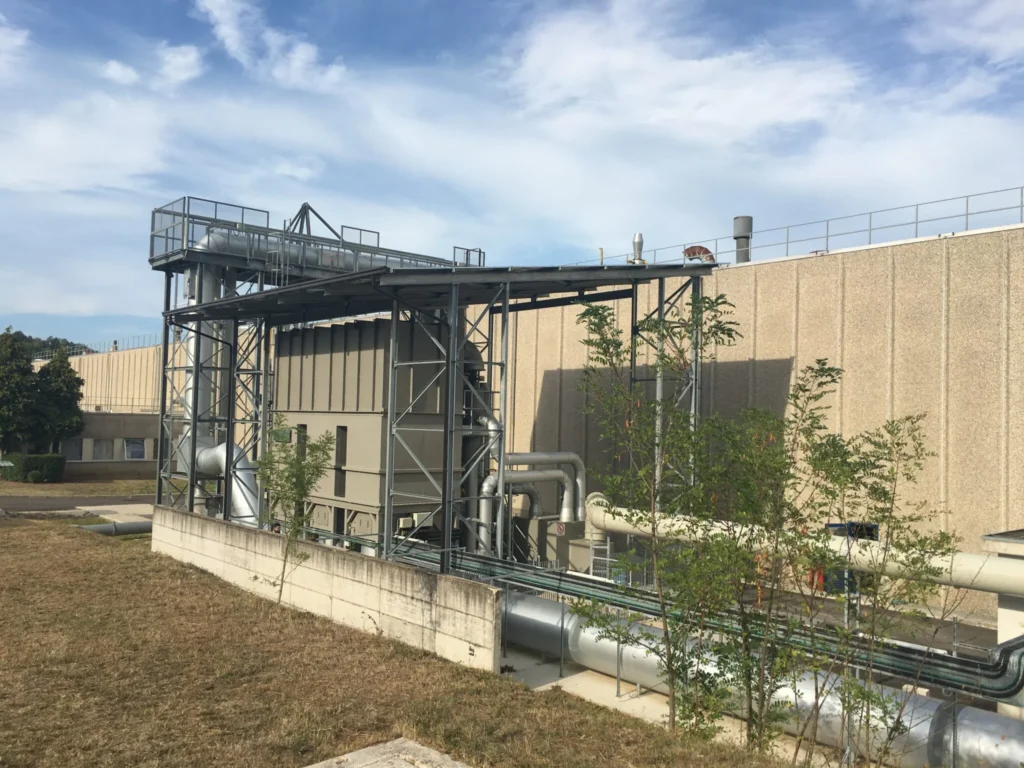
Catalytic oxidizers destroy VOCs and HAPs through a chemical reaction between pollutant molecules and a precious-metal catalyst bed. The catalyst lowers the activation energy required for the oxidation reaction, allowing it to proceed at temperatures of 600°F to 750°F rather than the 1,400°F+ required for thermal oxidation. This lower operating temperature reduces fuel consumption compared to non-catalytic thermal systems.
How a Catalytic Oxidizer Works:
VOC-laden process air is brought to the catalyst bed operating temperature of 600°F to 750°F. As the air passes through the precious-metal catalyst, typically palladium or platinum supported on a ceramic or metallic substrate, the VOC molecules react with oxygen in a surface-mediated oxidation reaction. Combustion products desorb from the catalyst surface and exit with the cleaned air stream. Catalytic oxidizers can also be configured with recuperative heat recovery to further reduce fuel requirements.
CECO’s Direct Fired Catalytic Oxidizers (DFCOs) are available in low-profile, skid-mounted form factors, and can be designed for 600°F to 750°F oxidation with a catalyst bed. These are well suited for high and rich LEL process applications.
VOC Concentrators
VOC Concentrators are not destruction devices on their own. They are volume-reduction systems placed upstream of a thermal or catalytic oxidizer to improve the overall efficiency of the abatement system. Concentrators are specifically engineered for the most economically challenging category of industrial VOC emissions: high-volume, low-concentration exhaust streams.
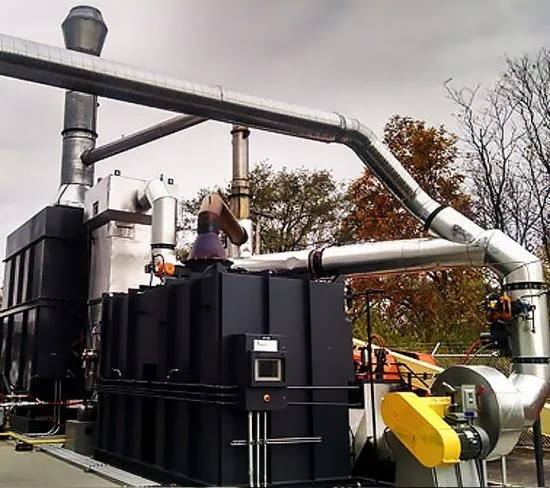
In these applications, common in automotive manufacturing, semiconductor fabrication, large-format printing and EV battery electrode production, the exhaust airflow volume can be very large while the VOC concentration is dilute. Treating the full volume directly through a full-sized oxidizer is inefficient: the oxidizer must be sized for peak flow and fuel consumption scales with volume rather than actual VOC load.
A concentrator separates the VOC capture function from the destruction function. It adsorbs VOCs from the large dilute airflow onto a solid adsorbent material then desorbs those VOCs in a small concentrated stream suitable for an appropriately sized and fuel-efficient oxidizer. The clean air stripped of its VOC content can be discharged; only the small concentrated desorption stream requires oxidation.
CECO’s VOC concentrator systems achieve concentration ratios as high as 100:1 and greater. They can be combined with any CECO oxidizer technology to create a hybrid system.
Zeolite Rotor Concentrators (RCTO)
The zeolite rotor uses a slowly rotating wheel embedded with zeolite, a microporous material with high adsorptive capacity for VOCs. The large-volume dilute process exhaust passes through the adsorption zone of the rotating wheel, where VOC molecules adsorb onto the zeolite surface. The cleaned air is discharged to atmosphere. The rotating wheel carries the VOC-loaded zeolite into a desorption zone, where hot air passes through in the opposite direction and desorbs the captured VOCs into a concentrated stream with a fraction of the original volume. That concentrated stream is directed to the downstream oxidizer.
Fluid Bed Carbon (FBC) Concentrators:
The Fluid Bed Carbon concentrator uses Bead Activated Carbon (BAC), small spherical activated carbon beads, as the adsorbent material. VOC-laden air forces through perforated steel trays, increasing air velocity and allowing the sub-millimeter carbon beads to fluidize, increasing the surface area of the carbon-gas interaction. Loaded carbon beads move continuously to a thermal regeneration zone where elevated temperatures desorb the VOCs into a small concentrated stream. Regenerated carbon is returned to the adsorption zone.

CECO Environmental provides turnkey project delivery including system design, engineering, fabrication, installation, startup and commissioning, performance testing and ongoing maintenance and service support of thermal oxidizers and VOC concentration systems for industrial facilities across North America, South America, Europe, Asia, the Middle East and Africa. CECO’s thermal abatement portfolio spans all five technology types: Regenerative Thermal Oxidizers, Recuperative Thermal Oxidizers, Direct Fired Thermal Oxidizers, Catalytic Oxidizers and VOC Concentrators, including integrated concentrator-oxidizer hybrid systems.
For facilities with existing thermal oxidizer installations, retrofit and upgrade services are available, including conversion of existing systems to autothermal flameless operation.



More Than Equipment. Engineered for Industrial Air Excellence.
As the world’s most complete end-to-end industrial air quality platform, CECO Environmental spans every stage of the industrial air treatment process, from the point of generation through final compliance. We listen and solve, innovate and support, across every major global market, so nothing stands in the way of your operations.